
Strategic Lifecycle Management: The Procurement Mandate
In professional IT procurement, selecting between a Lenovo ThinkPad and a Dell Latitude is not merely a brand preference—it is a decision that dictates your organization’s long-term hardware reliability, user satisfaction, and maintenance overhead. My decade of experience in enterprise deployments has shown that while both series represent the pinnacle of business-grade engineering, they serve distinct operational archetypes.
What are the key performance differences between a professional Lenovo PC laptop and a Dell notebook laptop?
Direct Answer: ThinkPads are engineered for rugged, long-form productivity with a focus on keyboard ergonomics and modularity, while Latitudes prioritize sleek, modern aesthetics, port density, and sophisticated enterprise software integration. Both utilize high-performance Intel/AMD architectures, but they optimize thermal management and build philosophy differently to meet distinct end-user requirements.
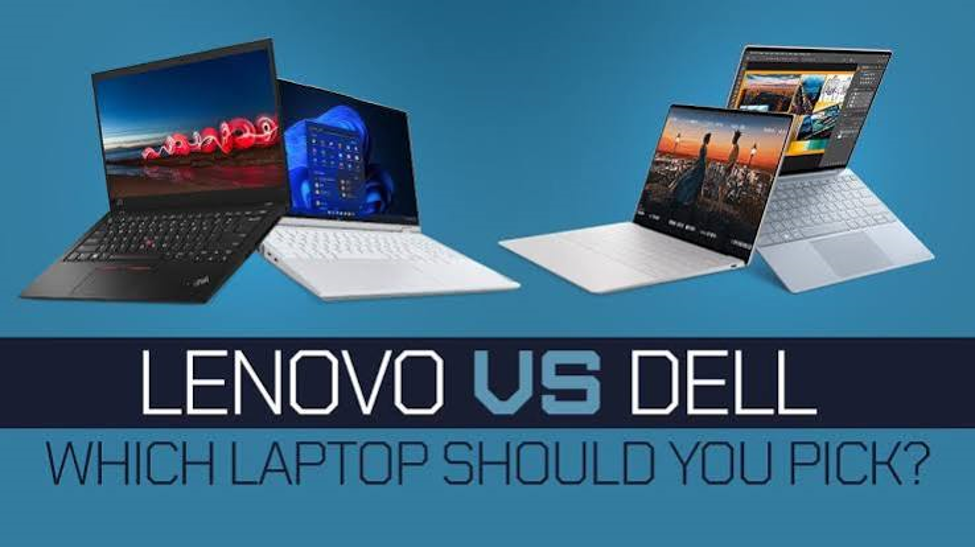
Technical Comparison Matrix
| Feature | Lenovo ThinkPad | Dell Latitude |
| Ergonomics | Industry-leading tactile feedback | Solid, professional, low-profile |
| Durability | MIL-SPEC / Rugged / Spill-resistant | MIL-SPEC / Premium alloy chassis |
| Manageability | ThinkShield / BIOS-level tools | Dell Command Suite / ProSupport |
| Serviceability | Exceptional (Modular T/X series) | High (Easy component access) |
| Aesthetic | Utilitarian / Industrial | Sleek / Professional / Modern |
“[Insert Technical Quote on Keyboard/Chassis Engineering]: The superiority of an enterprise chassis is not found in its weight, but in the structural rigidity that prevents motherboard fatigue over five years of active duty. ThinkPads utilize a reinforced ‘roll cage’ architecture that maintains alignment under extreme torsion, ensuring that every internal connection remains seated and secure regardless of the physical environment.”
Why does an enterprise-grade Lenovo computer laptop or Dell equivalent outperform consumer-tier devices in business environments?
Direct Answer: Unlike consumer-grade devices, these business-grade machines are validated against MIL-STD-810H standards to withstand vibration, extreme temperature fluctuations, and high-impact stress. They are designed for a 5-year support lifecycle with deep firmware integration, ensuring that hardware remains consistent across large-scale deployments—a critical factor for fleet-wide software stability and security compliance.
- Engineering Standards: Both lines undergo rigorous testing that consumer “ultrabooks” forgo, ensuring thermal stability under sustained heavy CPU/GPU loads.
- Support Lifecycle: Enterprise models guarantee long-term availability of spare parts and firmware/BIOS updates, critical for maintaining security compliance in regulated industries.
- Modular Design: Reference the standards in [Screenshot 2026-06-16 170357.png], which highlights the necessity of field-serviceable components (RAM, Storage, Battery) to minimize downtime and avoid the “replace-instead-of-repair” trap of consumer-market laptops.
How should a business owner choose between these two giants for long-term reliability?
Direct Answer: Choose based on your specific workforce persona. If your team consists of heavy typists, developers, or field workers, the ThinkPad’s tactile keyboard and extreme durability are unmatched. If your organization prioritizes sleek, client-facing aesthetics, rapid IT asset recovery, and extensive ProSupport telemetry, the Latitude series provides a superior fleet-management experience.
Procurement Reliability Checklist
- Warranty Alignment: Ensure your acquisition includes on-site, next-business-day support. Avoid depot-only warranties for critical business functions.
- Fleet Uniformity: Standardization is the enemy of maintenance overhead. Purchase matched SKUs to simplify image deployment and driver management.
- Lifecycle Planning: Evaluate the [Insert Enterprise Reliability Case Study] regarding your projected replacement cycle. Machines with modular RAM and SSDs (predominantly ThinkPad T/X and Latitude 7000/5000 series) offer the best potential for performance upgrades in years 3–5.
Optimize Your Professional Infrastructure
Your hardware is the foundation of your organization’s productivity. Don’t settle for retail-grade compromises; invest in a hardware strategy that scales with your business.
[Contact our consultative procurement team today to conduct a fleet hardware audit and right-size your deployment for maximum ROI.]